
20250715.md 3.2 KB
title:170 pixels (sharpening included)
desc:Eradicate all edges. Or how OEMs reiterate their meaning of portraits.
For years, OEMs have been keen on working with portrait modes on phones, each with their own varieties and quirks. But in the past four years, portrait mode has been redefined from the ground up, prioritizing hardware over software to better separate the subject from the background and maintain compression ratios [^first].
[^first]: The difference in how flattened subject is, related to background, and directly correlating to the final bokeh look.
This shift marks a significant evolution from the early days of portrait photography on phones. Initially, portrait modes heavily relied on software algorithms to create a blurred background effect, but now, the mode relies on both the provided hardware background blur and the supplementary effect from mode.
These methods often actually, mostly produced inconsistent results, with jagged edges around the subject and an unnatural, sometimes "painted" look to the bokeh.
With all of that being taken in account, the main source of improvements is now, wow, hardware!
Test subjects
| HONOR Magic 7 Pro | OPPO Find X7 Ultra | vivo X200 (CN, Base model) | |
|---|---|---|---|
| Processor | Qualcomm Snapdragon 8 Elite | Qualcomm Snapdragon 8 Gen 3 | MediaTek Dimensity 9400 |
| Telephoto Camera (3x, primary portrait camera) | 200MP 1/1.4" 0.56µm (2.24µm @ Hexa-deca-bayer) Samsung S5KHP3 based telephoto | 50MP 1/1.56" 1.0µm (2.0µm @ Quad-bayer) Sony IMX890 based telephoto | 50MP 1/1.95" 0.8µm (1.6µm @ Quad-bayer) Sony IMX882/LYT-600 based telephoto |
| EFL & Aperture | 72mm at ƒ2.6 | 62mm (cropped to 70mm) at ƒ2.6 | 70mm at ƒ2.6 |
| Portrait Profiles | Harcourt-tuned | No portrait profiles provided by Hasselblad | Zeiss-tuned |
| Software version | MagicOS meafnaf[^second] 9.0.0.123 (C185E1R3P2) | ColorOS CN 15.0.0.731(CN01) | OriginOS CN 15.0.31.15 |
[^second]: Middle East, North Africa, Africa. Also common region for Hong Kong units.
Why these three?
Because it would be fun to see three different types of hardware stacked against each other, wouldn't it? And to make people speculate whether each of these phones would be above either just based on raw specs.
Chapter 1: Loss of detail (LoD)
Loss of detail is a common consequence of lower-resolution shots, that portrait shots usually are, since they're being shot with a "fusion" technique by combining the monochromatic information from auxiliary camera to separate foreground subject from background.
In this case, the auxiliary cameras are not needed, as we have enough data to split FG from BG:
- Natural telephoto DoF provides an understandable canvas for image processing
- Laser AF provides information for distance between the foreground and camera, to provide accurate measurements to be used later
Our test devices work exactly in accordance to these principles, and do not require monochrome segmentation source to acquire differential information.
However, some devices without hardware capabilities to precisely differ S/FG use software depth map, like Google's Pixel devices do:
:::spoiler Click me!
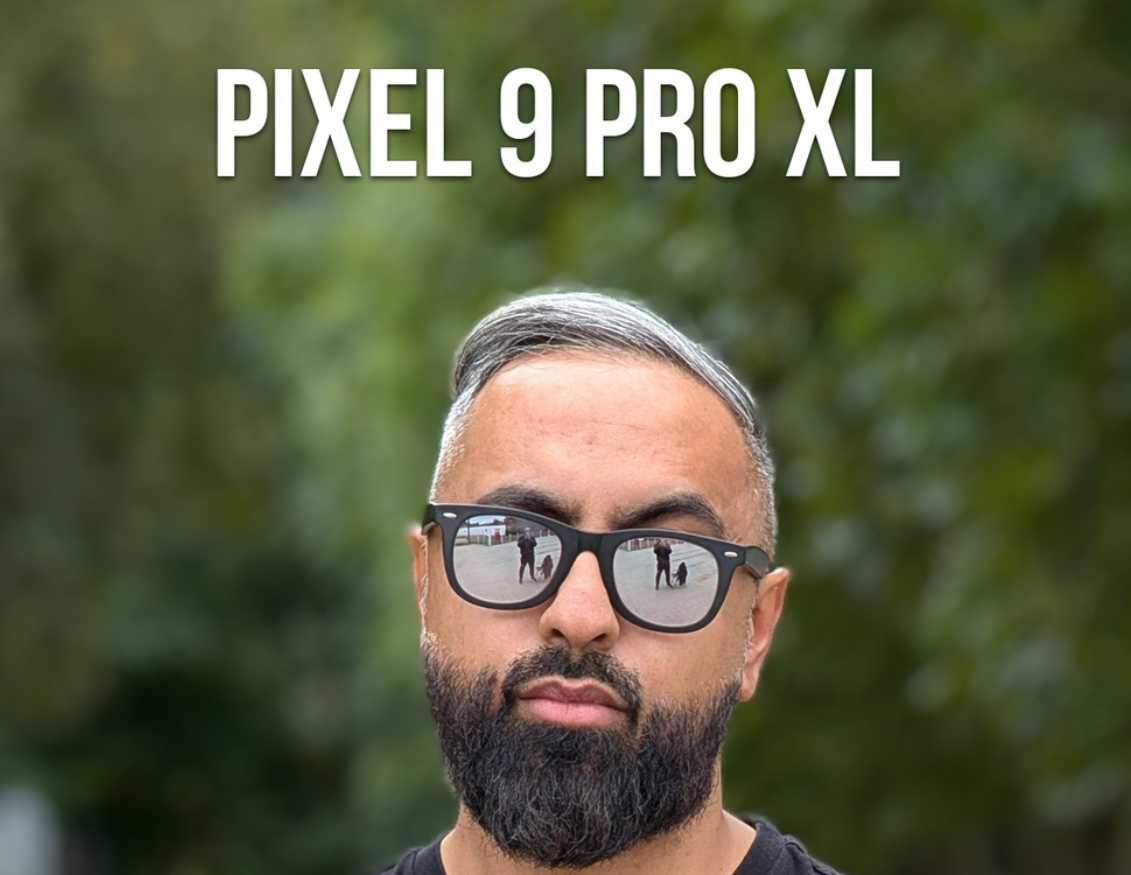 :::
:::